The accessible minibus, so everyone travels together
With a lift or ramp at the door and restraint points in the floor, this kind of minibus lets passengers stay in their own chairs for the journey. Layouts vary a lot, which is why we ask operators to confirm the exact vehicle for your trip.
Layouts vary more than you might expect
Each wheelchair position takes the place of some seats, so the seating depends on how many chairs are travelling. One layout might take a single chair and plenty of seated passengers, another several chairs and far fewer seats. Luggage space shrinks as well.
Tell us how many wheelchair users are coming, whether chairs are manual or powered, and whether anyone can transfer to a seat. We'll pass it on in full.
Typical models
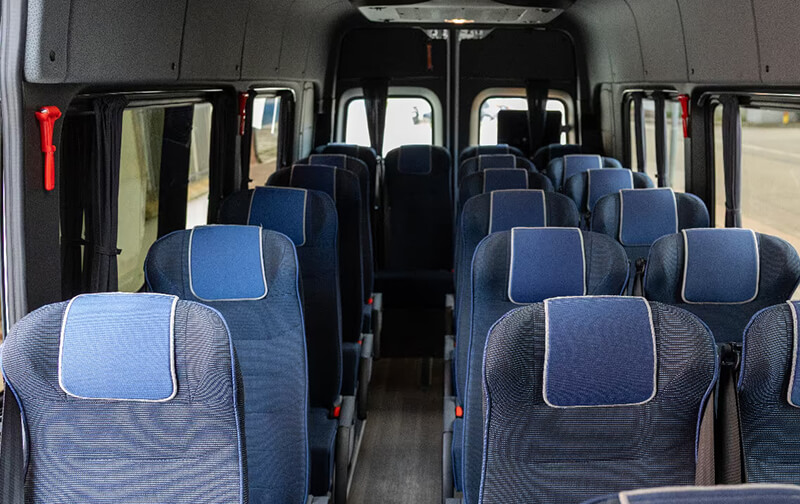
The photos show typical models in this size. Which vehicle runs depends on the partner operator that takes the booking.
These photos show standard minibuses; they do not show a lift, a ramp or wheelchair positions. Say which equipment you need when you ask for a quote.
Minibus (16 to 19 seats)
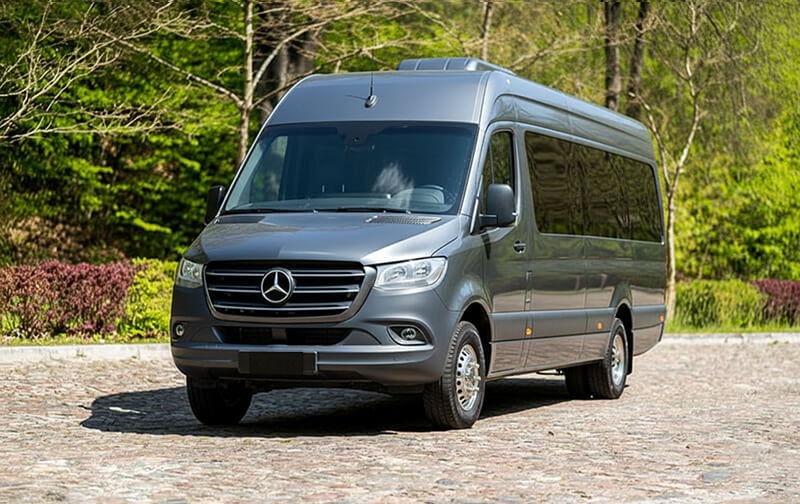
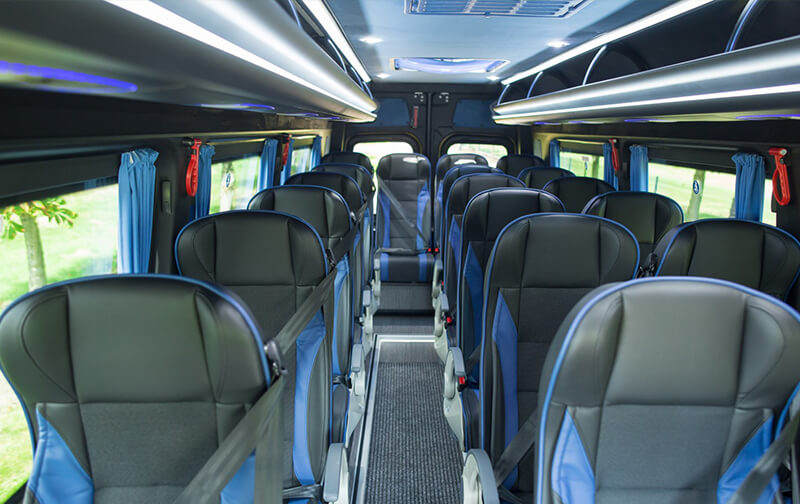
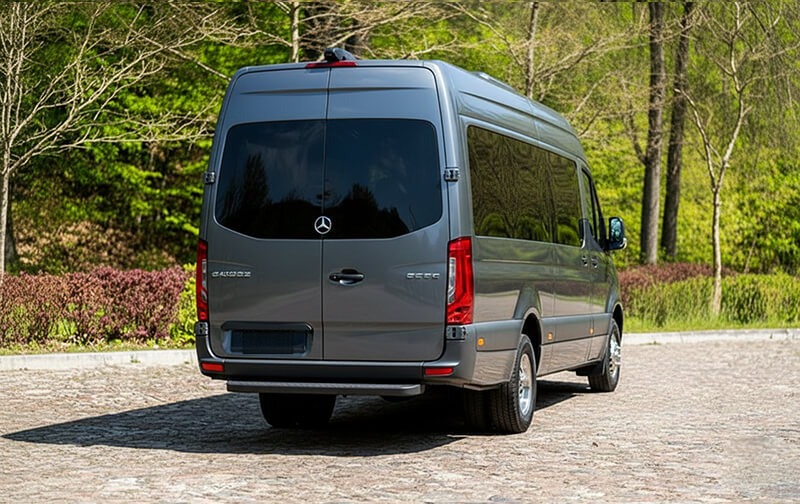
Mercedes Sprinter
19 passengers · 15 bags
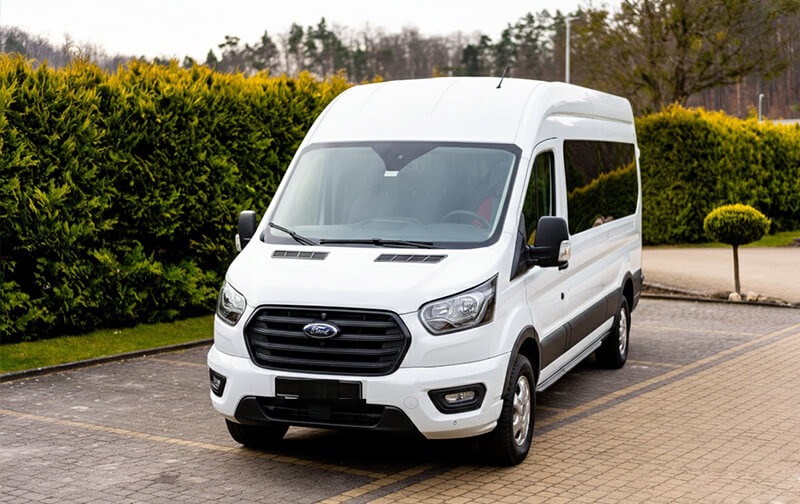
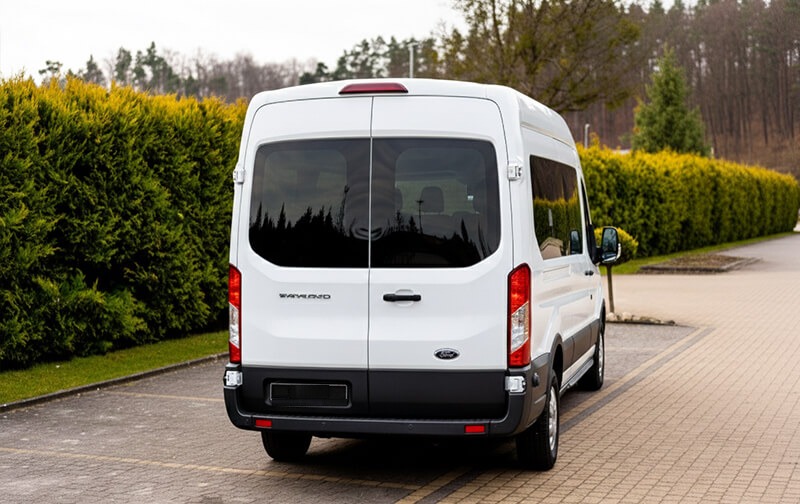
Ford Transit
16 passengers · 12 bags
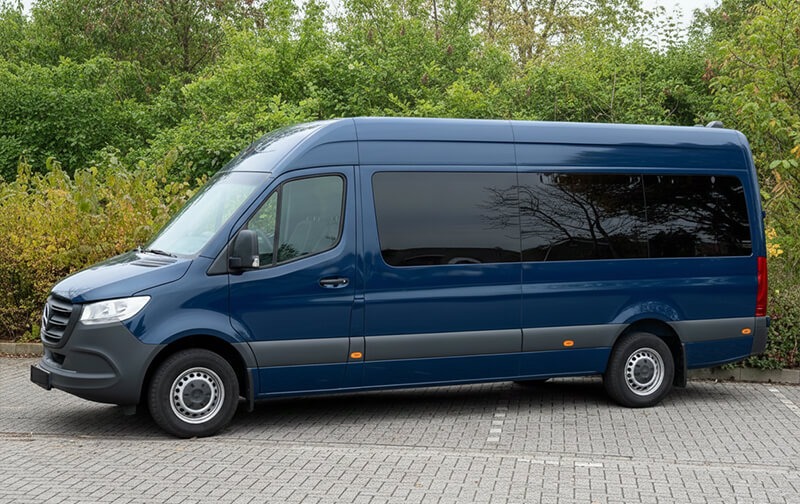
Mercedes Sprinter
17 passengers · 14 bags
The rules in plain words
Australia's public transport accessibility standards reach buses and coaches only when they're running a public transport service. Private charters are less clear, so we don't treat any vehicle as accessible until the operator confirms it.
NSW goes further for booked accessible vehicles, setting minimum length, width and headroom for every wheelchair space and expecting the driver to be competent at loading and securing chairs. Headroom matters for a tall powered chair with its user seated, so measure it before you ask.
Send those measurements along with the count of chairs. It saves a second round of questions and helps the operator offer the right vehicle first time.
On board
- A bus seating more than 12 adults, including the driver, with a GVM up to 8 t needs an LR licence
- In NSW, drivers of wheelchair-accessible hire vehicles must be competent in loading, unloading and transporting wheelchair passengers
- In NSW, wheelchair-accessible booked vehicles need a wheelchair space at least 1,300 mm long, 800 mm wide and 1,500 mm high for each wheelchair
- The Disability Standards for Accessible Public Transport cover buses and coaches when used to provide a public transport service
- Lift or ramp access with wheelchair restraint positions
Trips it suits
Day programs and aged-care outings, airport and cruise transfers, family celebrations and event days. For a big mixed group, one accessible minibus plus a standard minibus often works well, with both vehicles arriving together.
Allow a little extra time at each stop. Loading and securing several chairs takes longer than a group stepping aboard, and a relaxed timetable keeps the day pleasant for everyone.
Your questions
Is an accessible minibus always available?
No. Supply varies by city and date, so ask early. We'll only confirm once an operator has named a suitable vehicle.
Can a mobility scooter travel on board?
Sometimes. Give the scooter size and weight, and whether the rider can transfer to a seat, and we will ask.
Do carers need a seat of their own?
Yes. Count every carer in the numbers so the layout works for everyone.
More trips we can arrange
- Getting your team to the offsite, the dinner and home again
- School excursions and camps, planned around the class
- Getting the team, the kit and the supporters to the game
- Wedding transport that gets every guest there on time
- A day among the vineyards, with someone else driving
- Day trips out of the city, at your group's pace
- From the gangway to your hotel, with the whole group together
- Travelling together when someone uses a wheelchair